
Why Hybrid Servo Motors Are the Future of Energy-Efficient Motion Control

April 11, 2025
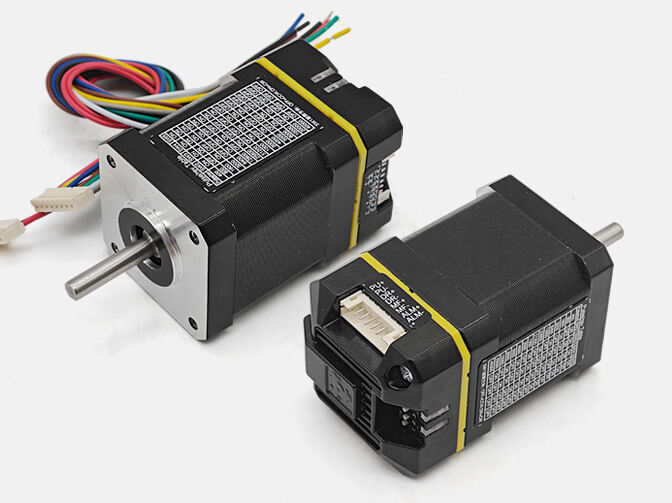
As industries worldwide continue to prioritize sustainability and energy efficiency, the demand for advanced motion control technologies has grown exponentially. In the realm of motion control, servo motors play a crucial role in powering precision-driven applications across manufacturing, robotics, automation, and more. Among the various types of servo motors, hybrid servo motors are gaining traction as the next frontier of energy-efficient solutions. With their unique design and capabilities, Stepper Motor & Drivers s are poised to become the future of motion control, providing improved energy efficiency, performance, and reduced environmental impact.
What Are Hybrid Servo Motors?
Hybrid servo motors are a blend of two core technologies: the stepper motor and the traditional AC servo motor. Combining the best of both worlds, hybrid servo motors offer the precise control of stepper motors along with the smoothness and power efficiency of AC servo motors. This hybrid design enables these motors to provide high torque output with minimal energy consumption, making them an ideal solution for industries that require both power and energy efficiency.
The hybrid servo motor achieves its performance by using a permanent magnet rotor, which is coupled with a stator that incorporates both the characteristics of stepper and servo motor systems. The result is a motor that combines high efficiency, accuracy, and reliability while being able to handle a wide range of industrial applications.
Energy Efficiency: The Key Advantage
One of the primary reasons hybrid servo motors are considered the future of motion control is their exceptional energy efficiency. Traditional AC servo motors, although highly efficient, often consume more power than necessary, especially at partial load conditions. This is due to their reliance on continuous power supply to maintain the motor’s torque and speed.
In contrast, hybrid servo motors use advanced control systems to optimize power consumption. These Brushless DC Motors & Drivers adjust their input power based on load requirements, reducing unnecessary energy expenditure. By only consuming the power necessary for the specific task at hand, hybrid servo motors significantly cut down on energy waste, which leads to lower operational costs and a smaller carbon footprint.
Enhanced Performance and Precision
Hybrid servo motors offer enhanced performance and precision, making them ideal for applications that demand high levels of accuracy. Unlike stepper motors, which can experience torque ripple and vibration, hybrid servo motors provide smooth and consistent motion, resulting in less wear on equipment and components. Their precision is particularly beneficial in industries such as robotics, CNC machining, and packaging, where exact positioning and repeatability are crucial.
Additionally, the hybrid design allows these motors to deliver high torque at lower speeds, offering better control over acceleration and deceleration. This enhanced performance reduces the need for oversized motors and inefficient components, leading to further energy savings and cost reductions.
Reduced Heat Generation
Another advantage of hybrid servo motors is their ability to generate less heat during operation. Excessive heat production is a common issue in many Closed Loop Steppers Motors & Drivers, leading to energy inefficiency and potential damage to equipment. The hybrid servo motor's efficient power consumption and smooth operation minimize heat generation, allowing for longer-lasting motors and less need for additional cooling systems. This not only contributes to energy efficiency but also reduces maintenance costs and improves the overall lifespan of machinery.
Environmental Impact and Sustainability
As industries shift toward more sustainable practices, hybrid servo motors offer a tangible solution for reducing environmental impact. Their superior energy efficiency and lower heat generation contribute to a reduction in overall power consumption, helping organizations meet their sustainability goals. With energy costs rising and regulatory pressure increasing on companies to minimize their carbon footprints, adopting hybrid servo motors is an effective way to enhance operational efficiency while also being environmentally responsible.
Future Applications and Integration
Looking ahead, the role of hybrid servo motors in motion control is expected to expand significantly. As automation and robotics become increasingly prevalent across industries such as automotive, aerospace, and electronics, the need for energy-efficient, high-performance motors will only grow. Hybrid servo motors are well-suited to power emerging technologies like electric vehicles, advanced manufacturing systems, and AI-driven robotics, where both precision and energy efficiency are critical.
Furthermore, as the Internet of Things (IoT) and smart factories continue to evolve, hybrid servo motors can integrate seamlessly into these systems. With advanced monitoring and control capabilities, they offer the flexibility and adaptability required for modern industrial applications.
Conclusion
Hybrid servo motors are set to redefine the future of motion control by offering a blend of energy efficiency, precision, and reliability. Their ability to reduce energy consumption, minimize heat generation, and provide enhanced performance makes them an ideal choice for industries looking to optimize operations while reducing their environmental impact. As technology continues to advance, Integrated Stepper Servo Motors will play a pivotal role in shaping the next generation of energy-efficient motion control systems, helping industries achieve greater sustainability and performance.